
5 More Disturbing Cases Headed to Trial in 2025
Including a Mother’s Day Poison Dart & Two “No Body” Prosecutions

For decades, it’s been an unwritten rule of criminal law not to prosecute someone for murder without discovering the body of the victim. The body tells authorities a cause and manner of death, and without it, prosecutors often struggle to prove guilt beyond a reasonable doubt.
Critics have long argued that such a practice rewards murderers for covering up their crime and even incentivizes obstruction of justice.
In recent years, a growing legion of intrepid prosecutors have sought have bypass this pablum by proving the victim is dead and stacking the circumstantial evidence against the perpetrator.
Federal prosecutor Thomas A. (Tad) DiBiase, author of the book “No-Body Homicide Cases: A Practical Guide to Investigating, Prosecuting and Winning Cases When the Victim is Missing,” says the conviction rate of “no-body” prosecutions is actually higher (86%) than the standard murder case (70%) because the ones that make it to court are usually flush with evidence.
The first two cases on this list are “no-body” prosecutions. How have investigators and prosecutors circumvented the missing victim with supplementary chains of evidence?
Commonwealth v. Brian Walshe
No-Body, But Very Incriminating Web Searches
Brian Walshe’s wife, Ana, a Serbian mother of three, disappeared on Jan. 1, 2023 after having a New Year’s Eve dinner with Brian and a family friend. Brian (47) claimed she flew back to D.C. from their home in Massachussets for a work emergency. But her company claims there was no such emergency and wasn’t aware of Ana’s supposed return until Jan. 4, when Brian contacted them.
Ana’s body is still missing but authorities have nonetheless charged Brian Walshe with first-degree murder. Presumably, a major reason for this was the discovery of his bone-chilling online search results, which prosecutors have battled to safeguard as trial evidence.
Authorities claim that starting on Jan. 1 and continuing for several days thereafter, Brian searched the Internet for:
“dismemberment and best ways to dispose of a body”
“How long before a body starts to smell”
“Hacksaw best tool to dismember”
“Can identification be made on partial remains”
“How to clean blood from wooden floor”
“How long for someone to be missing to inherit”
This last item connects to another piece of circumstantial evidence tied to Brian Walshe’s alleged motive: prior to her disappearance, a $2.7 million-dollar life insurance policy was taken out for Ana that named Brian as the sole beneficiary.
According to prosecutors, Brian was convinced Ana was having an affair and was going to leave him because of his conviction and prison sentence from an unrelated Andy Warhol art fraud case earlier that year.
Brian Walshe’s attorney, Tracy Miner, reminded the court that there’s been no body recovered or murder weapon entered as evidence—and that a person is not presumed dead for seven years “because it is easy for a single person to disappear if they want to disappear.”
However, investigators produced Jan. 3 surveillance video showing what appears to be Mr. Walshe disposing of heavy trash bags; on Jan. 8, they searched a trash processing facility close to Brian’s mother’s house and recovered a hatchet, hacksaw, towels and a protective Tyvek suit, cleaning agents, a Prada purse, boots like the ones Ana Walshe was last seen wearing and a COVID-19 vaccination card with her name.
A trial date has been set for Oct. 20, 2025.
CA v. Larry Millete
No-Body, But Perhaps a Crime Scene
After a seemingly endless succession of delays, modifications, and postponements, Chula Vista man Larry Millete will finally be tried for the murder of his wife Maya, who disappeared in 2021 and has not been found.
The search for May "Maya" Millete consumed San Diego County, with countless volunteers combing the canyons and woodlands of Glamis Dunes Imperial Valley, Dehesa, and Elfin Forest Recreational Reserve.
Chula Vista police interviewed nearly 100 of Maya’s family members, friends, and neighbors, and executed dozens of search warrants, including one for Maya’s home, and filed a Temporary Gun Violence Restraining Order (GVRO) against Larry. According to the CVPD, one of the search warrants was for a home belonging to a relative of Maya, where authorities sought evidence for the source of “several bangs recorded on a video security system near the Millete residence during the night of May’s believed disappearance.”
The “multi-agency group” working on the case included the San Diego District Attorney’s Office, the FBI, the Naval Criminal Investigative Service, and an independent partner called the Matrix Intelligence Agency, which, according to retired Army Major Ed Dames, uses remote viewing to find missing people.
On Oct. 19, 2021, Larry Millete was finally arrested in connection with his wife’s death. San Diego County District Attorney Summer Stephan indicted Larry on two counts—murder and the illegal possession of an assault rifle.
Prosecutors believe Larry Millete killed Maya after she filed for divorce. At his arraignment, a criminal protective order was filed preventing Larry from contact with his three children.
In the search for Maya’s body, a number of false alarms and red herrings frustrated investigators’ efforts. However, Billy Little, a former Navy Defense lawyer, expressed optimism over evidence allegedly found in the couple’s home:
“The way that the search was done, the instruments that were used, the black light, meaning they’re looking for blood, they’re using luminol or blue star, they’re using 3D cameras inside to photograph the scene,” said Little. “That’ll be good for analysis and be good for the jury when they do the prosecution.”
The trial is set to proceed in July 2025.
CO v. Barry Morphew
A Poisoned Dart on Mother’s Day
The arc of this case is wild, with vibes similar to Chris Watts and Michael Peterson (subject of The Staircase) in terms of the audacity of the alleged perps.
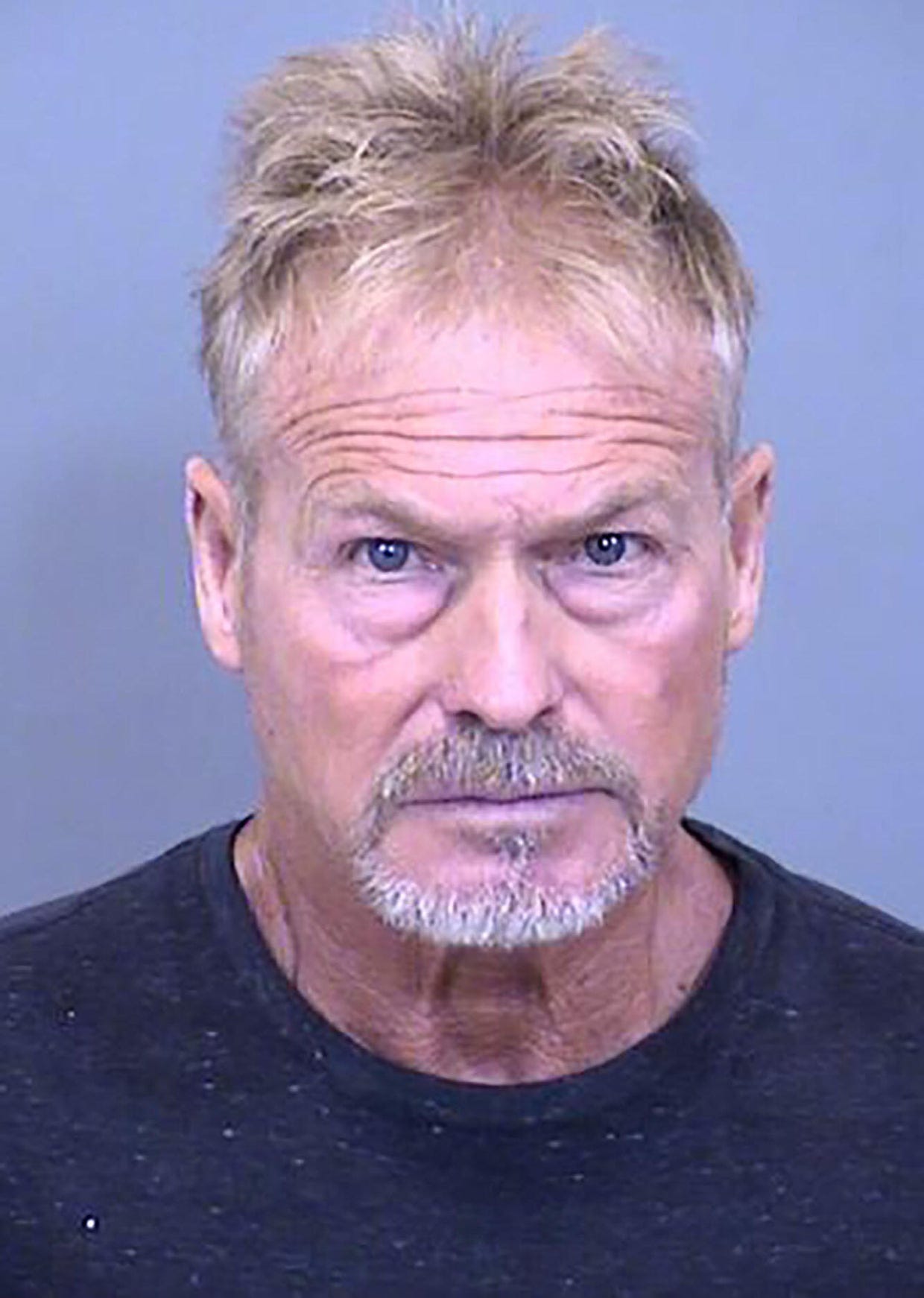
On June 25th, 2025, Barry Morphew was re-indicted for the murder of his wife, Suzanne Morphew, five years after she was reported missing on Mother’s Day 2020. Barry was originally indicted back in 2021, but those charges were dropped just before trial due to claims of prosecutorial misconduct—specifically, the failure to disclose key evidence to the defense.
After he was released, Barry did the rounds, appearing on Good Morning America with his daughters and publicly proclaiming his innocence. He claimed once again that his wife Suzanne vanished after going out for a bike ride (investigators found her bike down a remote embankment less than a mile from their home in Salida, Colorado; her helmet was discovered eight miles away).
Barry, a former deer farmer, claims he left early that morning for a last-minute landscaping job in Denver. But from the start, investigators ran into major inconsistencies in his timeline, his phone and vehicle data, and with statements from his employee—which all give indications that the work trip was a cover story.
Without a body or a cause of death, however, prosecutors just didn’t have enough to prosecute. Barry seemed certain he was in the clear. He even filed a $15 million wrongful prosecution lawsuit.
Then, in Sept. 2023, the axis shifted: Suzanne’s remains were discovered in a shallow grave off a remote road, far from where she had supposedly vanished.
The autopsy only deepened police suspicion. Forensic experts noted that her bones were bleached and clean, the usual markers of outdoor decomposition suspiciously absent. Similarly, her bike clothes, found with the remains, showed no decomposition, casting major doubts on whether she had been wearing them at the time of death.
In what may be the most damning—and chilling—piece of new evidence, the El Paso County Coroner detected BAM, a tranquilizer chemical used to immobilize wildlife, in Suzanne’s remains. According to the new indictment, Barry Morphew had purchased BAM, which contains butorphanol, azaperone, and medetomidine, in Indiana before moving to Colorado, and he was the only private citizen in the area with access to it at the time of her disappearance. Investigators even found a tranquilizer dart cap, which presumably fell from Barry’s shorts, in the family’s dryer.
While the toxicology findings don’t assign a cause of death, they tell a clear story about what happened and what didn’t happen. Because her body was able to start metabolizing the drugs, forensic experts have stated they believe Suzanne was not killed right after the BAM entered her system; they also inferred that her body was moved to the shallow grave in Saguache County. The absence of bug or animal activity—a form of evidence known as forensic entomology—further indicates that her body likely decayed somewhere else before it was moved to the grave.
Combined with surveillance footage showing Barry throwing away items in trash cans instead of working, deleted text messages from Suzanne (in which she proclaimed in no uncertain terms that the marriage was over), and suspicious phone activity—including his phone being turned off during key periods—prosecutors intend to argue that Barry killed Suzanne in a calculated act to avoid divorce and protect his image.
For now at least, Barry continues to maintain his innocence as he awaits trial back in Colorado, (after being re-arrested in Arizona). It’s one of two poison murders being adjdicated playing in the state.
Alabama v. Mac Marquette
“Stand Your Ground” vs. Police Immunity
The small town of Decatur, Alabama, (population: 60,000) is home to the murder trial of former police officer Mac Marquette, which has sharply divided the community. This is a rare case in which the state’s “Stand Your Ground” law has been pitted against police immunity.
Mac is charged with fatally shooting Steve Perkins, a Black man, in his front yard during the early hours of September 29, 2023. Marquette had gone to Perkins' home with three other officers to assist a tow-truck driver, Caleb Combs, who claimed Perkins had pointed a gun at him during a failed attempt to repossess his truck. Combs told police he wanted to try again but wouldn't go back alone.
This chaotic case has thus far revolved around determining a key fact: Alabama law requires a judge’s authorization if there’s been a “breach of the peace” during a repossession—and that doesn’t seem to have happened here. So while the judge acknowledged the officers had a right to approach the property and even park nearby, they crossed a line when they entered the yard without witnessing an active crime.
Judge Charles Elliott ruled that because they failed to announce themselves or engage Perkins directly, the officers were effectively trespassing, which contradicts Marquette’s claim of self-defense.
Bodycam footage showed Marquette rounding the corner of the house and confronting Perkins, who seems to have been unaware police were present. Within less than two seconds, Marquette fired 17 shots and killed the father of two.
The footage shows that Perkins may have tried to move his gun away, but by that point Marquette had already begun firing. Officers claim they shouted for Perkins to drop his weapon, but the judge concluded they were hiding and had not identified themselves clearly.
Jurors will now decide whether Marquette was there to "keep the peace"—as he claims—or whether his actions violated the law and escalated a tense but avoidable situation. The case was scheduled to begin June 9th, 2025, but it appears to have been delayed by an appeal.
Florida v. Stephan Sterns
The Murder of Madeline Soto
In late February 2024, 13-year-old Madeline Soto didn’t show up at her Orlando-area school. Her mom reported her missing on February 26, and an intense search of the nearby woodlands was conducted.
Bodycam footage shows the initial police interview of her legal guardians, including her mom Jennifer and her mom’s boyfriend, a man named Stephan Sterns. Right from the beginning, something seemed off, and suspicion almost immediately fell on Stephan as the last person to see Madeline alive. He allowed investigators to search his phone but said he’d accidentally initiated a factory reset on the very day Madeline disappeared.
Stephan said he dropped her off near school that morning (because, he claimed, she was embarrassed by his car), but surveillance videos told a completely different story—Madeline never reached school, and subsequent footage even captured Sterns returning home with Madeline in the car, slumped over and possibly already dead.
Even more damning, investigators later obtained a disturbing surveillance video from a hotel parking lot showing Sterns carrying what appeared to be Madeline’s limp body from his car to the trunk.
Four days after her disappearance, deputies found Madeline’s body in the fetal position in a bamboo thicket 40 miles from their home. Her socks were completely clean, and it wasn’t hard for investigators to infer that she hadn’t walked there herself.
An autopsy soon revealed the girl’s cause of death: homicide by strangulation. The medical examiner noted that the right side of Madeline’s hyoid bone “was not intact…”
The investigation into Stephan pried open a dark, hellish universe, with detectives discovering “disturbing” images on Sterns’ cell phone, as well as frantic attempts to delete evidence.
They do not believe the murder was planned in advance. Over 1,500 videos and pictures of alleged sexual abuse were uncovered.
Investigators further established that Sterns and Madelines’ home life displayed major red flags, as the girl’s mom freely admitted her boyfriend and daughter shared a separate bed where they cuddled and slept together. Some analysts have suggested Jen could be charged with neglect, though others believe she was under Sterns’ control.
A grand jury agreed with investigators that there was enough evidence to officially charge Sterns with first-degree murder, as well as child sexual battery-related charges. State Attorney Andrew Bain moved forward with 60 additional counts, including:
Eight counts of sexual battery on a child under 12
Five counts of sexual battery of a child aged 12-18
Seven counts of lewd and lascivious molestation
40 counts of unlawful possession of 10 or more images depicting a sexual performance by a child
Sterns' trial is scheduled to begin on September 22, 2025.